인도 남동부 인도양 안다만 해 꼬꼬 섬 Andaman Sea Coco Island 안내-인도가 버마(미얀마)에 꼬꼬 섬을 선물한 이유, 꼬꼬 섬의 숨겨진 이야기 / 인도에서 가장 고립된 섬 안다만 과 니꼬바 섬 / 인도 꼴카타에서 안다만 섬까지 럭서리 배로 여행하기 / 일본에서 안다만 그리고 니꼬바 섬 여행하기 / 첸나이에서 안다만 섬까지 크루즈 배로..
The Coco Islands are a group of islands in the northeastern Bay of Bengal, situated approximately 18 km north of India’s North Andaman Island. They are politically administered by Myanmar and are part of its Ayeyarwady Region. Despite their small size and remote location, the Coco Islands hold significant strategic relevance due to their proximity to major Indian military and commercial assets. Historically, the Coco Islands were part of British India but were administratively transferred to British Burma in 1878. After the independence of India and Burma (now Myanmar), the islands remained with Burma. The two main islands — Great Coco and Little Coco — have since remained under Myanmar’s control. India has never claimed these islands post-independence. The islands were previously used for penal colonies during the colonial era and remained sparsely populated or uninhabited in the modern era. Over the past three decades, satellite imagery has shown significant infrastructure development, particularly on Great Coco Island. Key features include: A 2,300-meter-long airstrip, capable of supporting large military aircraft. Radar domes and buildings resembling SIGINT (Signals Intelligence) infrastructure. No civilian habitation is currently known on the island, and access remains highly restricted. These developments have been monitored closely by Indian defence agencies and global intelligence firms. Since the 1990s, multiple international defense analysts and open-source intelligence platforms have reported that China has been involved in the construction and operation of surveillance infrastructure on Great Coco Island. Key reports include: Stratfor (1992) and Jane’s Intelligence Review cited unnamed Indian defense sources suggesting that Chinese personnel and equipment were present on the island, assisting in the construction of electronic intelligence facilities. The alleged purpose of these facilities is to monitor Indian naval activity, missile tests, and traffic through the strategic Malacca Strait. While Myanmar has consistently denied these reports, and China has not officially confirmed any involvement, the accusations remain active in defense and geopolitical discourse. These claims have not been independently verified through on-ground inspection due to the island’s restricted status. The Coco Islands are located near key Indian military installations, including: INS Baaz at Campbell Bay (India’s southernmost naval air station). India’s Integrated Test Range at Wheeler Island and Abdul Kalam Island off the Odisha coast. Shipping lanes through the Malacca Strait, which are critical for regional and global trade. Due to these proximities, any foreign surveillance facility based in the Coco Islands could offer significant intelligence-gathering capability over Indian defense and commercial maritime operations.
क्या coco island को म्यांमार से छीन लेगी मोदी सरकार? |
During our travel in Andaman islands, i was curious to ask learn about things that afffect life of locals in Andaman. There are couple of questions in my mind, so i was not sure whom to ask. I met Mr. Sanjeev Roy who is a Port Blair based press reporter.
After spending weeks traveling across Japan — from neon-lit cities like Tokyo and Osaka to remote villages and mysterious islands — I’ve now landed in one of India’s most remote and overlooked regions: the Andaman & Nicobar Islands. This marks the beginning of a new chapter, far away from the futuristic bullet trains and vending machines of Japan, into a land where dense tropical jungles, tribal communities, volcanic islands, and colonial ruins coexist in silence, surrounded by the endless Indian Ocean.
KOLKATA to ANDAMAN in LUXURY Ship | 5 Days in MV NALANDA | DELUXE Class Experience#andaman
First time in my life, I was on a ship journey for 4 days and experienced a thrilling adventure trip. Please watch the full video and share it with your friends too.
Port Blair to Neil Island in Govt. Ship | MV Pilowmillow
An entire island abandoned — not by war or disaster, but by something invisible. Rongelap Atoll was once a thriving Pacific community, until nuclear fallout from U.S. testing forced its residents to flee. Today, it stands frozen in time — buildings decaying, possessions untouched, and an eerie silence that tells a story few have seen. In this gripping exploration, we uncover the secrets left behind and reveal why no one ever came back.
An old manifest reveals the last flights that ever took off on this runway. We explore crumbling resorts, a forgotten runway, and places that seemed completely frozen in time.
There are nearly four-thousand ghost towns in the United States alone, and many more dotted around the world. There’s a good chance that wherever you are, you can live rent-free in one of these dilapidated towns free of noisy neighbors. But while most of these places are small, there are some pretty big abandoned places. Here are the 15 largest abandoned cities in the world.
After spending weeks traveling across Japan — from neon-lit cities like Tokyo and Osaka to remote villages and mysterious islands — I’ve now landed in one of India’s most remote and overlooked regions: the Andaman & Nicobar Islands. This marks the beginning of a new chapter, far away from the futuristic bullet trains and vending machines of Japan, into a land where dense tropical jungles, tribal communities, volcanic islands, and colonial ruins coexist in silence, surrounded by the endless Indian Ocean. I flew from Raipur to Hyderabad (Sri Vijayapuram Airport), then took a connecting flight that cut me off from mainland India completely. Port Blair, the capital of these islands, is located over 1,200 km from the Indian mainland — closer to Southeast Asia than to Kolkata or Chennai. The Andaman & Nicobar Islands are not just a remote destination; they are a completely different world. This union territory of India is made up of 572 islands, yet only 37 are inhabited. Many remain untouched, protected by dense forests and coral reefs. The islands are home to some of the world’s last remaining indigenous tribes — including the Jarwa, Onge, Shompens, and the completely uncontacted Sentinelese, who live on North Sentinel Island. These communities have existed for tens of thousands of years, maintaining their way of life with no influence from the modern world. Entry into tribal reserves is strictly controlled or prohibited, not just for their safety, but also to preserve one of the few unbroken links to prehistoric human existence. The region also has deep scars from colonial history. Port Blair’s infamous Cellular Jail — often called “Kala Pani” — was used by the British to imprison and torture Indian freedom fighters. Walking through its corridors feels like stepping into a shadow of India’s freedom struggle, far away from the noise of Delhi or Mumbai. Nature here is equally dramatic. The Andamans are home to India’s only active volcano — Barren Island, which occasionally releases smoke and ash into the sky. Beneath the ocean surface, coral reefs teem with life, and beaches like Radhanagar on Havelock Island (now Swaraj Dweep) are often ranked among the best in Asia. The forests are dense and mysterious, inhabited by birds, reptiles, and creatures rarely seen elsewhere in the country. Even elephants were once taught to swim between islands here — a practice that made one of them, Rajan the swimming elephant, globally famous. But beyond the beaches and beauty, what draws me most to these islands is the feeling of isolation. It’s not just physical — it’s cultural, emotional, and historic. In a country as fast-paced and hyper-connected as India, the Andaman & Nicobar Islands feel like a pause button — a place where time slows down and silence becomes sacred. This video is the beginning of a new series where I’ll be exploring these islands not just as a tourist, but as a storyteller — diving into their history, culture, landscapes, and the lives of people who call this isolated corner of the world home. If you’ve been following my Japan series, consider this the perfect contrast: from one of the most technologically advanced nations on Earth, to a region where ancient traditions still live untouched. This journey is not just about travel — it’s about shifting worlds.
Transcript
Why India Gifted Coco Islands to Myanmar? Untold Story of Coco Islands
The Coco Islands are a group of islands in the northeastern Bay of Bengal, situated approximately 18 km north of India’s North Andaman Island. They are politically administered by Myanmar and are part of its Ayeyarwady Region. Despite their small size and remote location, the Coco Islands hold significant strategic relevance due to their proximity to major Indian military and commercial assets. Historically, the Coco Islands were part of British India but were administratively transferred to British Burma in 1878. After the independence of India and Burma (now Myanmar), the islands remained with Burma. The two main islands — Great Coco and Little Coco — have since remained under Myanmar’s control. India has never claimed these islands post-independence. The islands were previously used for penal colonies during the colonial era and remained sparsely populated or uninhabited in the modern era. Over the past three decades, satellite imagery has shown significant infrastructure development, particularly on Great Coco Island. Key features include: A 2,300-meter-long airstrip, capable of supporting large military aircraft. Radar domes and buildings resembling SIGINT (Signals Intelligence) infrastructure. No civilian habitation is currently known on the island, and access remains highly restricted. These developments have been monitored closely by Indian defence agencies and global intelligence firms. Since the 1990s, multiple international defense analysts and open-source intelligence platforms have reported that China has been involved in the construction and operation of surveillance infrastructure on Great Coco Island. Key reports include: Stratfor (1992) and Jane’s Intelligence Review cited unnamed Indian defense sources suggesting that Chinese personnel and equipment were present on the island, assisting in the construction of electronic intelligence facilities. The alleged purpose of these facilities is to monitor Indian naval activity, missile tests, and traffic through the strategic Malacca Strait. While Myanmar has consistently denied these reports, and China has not officially confirmed any involvement, the accusations remain active in defense and geopolitical discourse. These claims have not been independently verified through on-ground inspection due to the island’s restricted status. The Coco Islands are located near key Indian military installations, including: INS Baaz at Campbell Bay (India’s southernmost naval air station). India’s Integrated Test Range at Wheeler Island and Abdul Kalam Island off the Odisha coast. Shipping lanes through the Malacca Strait, which are critical for regional and global trade. Due to these proximities, any foreign surveillance facility based in the Coco Islands could offer significant intelligence-gathering capability over Indian defense and commercial maritime operations.
कच्छातिव भारत से कैसे खो गया? | India's Kachchatheevu Island
भारत और श्रीलंका कई वर्षों से बिना किसी निवासी वाले एक द्वीप को लेकर विवाद कर रहे हैं। कच्छातिव एक विवादित भूमि कैसे बन गई? इसका समाधान क्या है? जानिए।
India and Sri Lanka have been disputing an island with no inhabitants for many years. How did Kachchativa become a disputed land? What is the solution? Find out.
Travel To Cocos island | Full History And Documentary |
Australia's Cocos island In Urdu & Hindi | کوکوس کی سیر
Travel To Cocos island | Full History And Documentary | Australia's Cocos island In Urdu & Hindi | کوکوس کی سیر
Facts About Cocos (Keeling) Islands
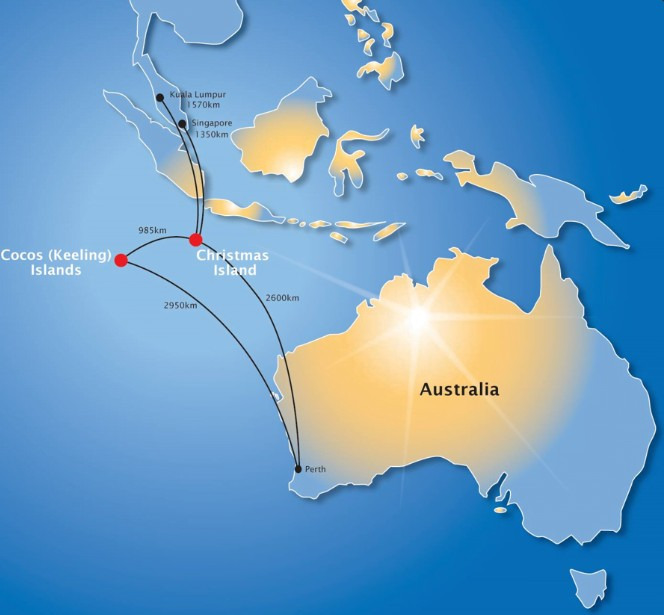
The Cocos (Keeling) Islands are a remote territory of Australia in the Indian Ocean. Its 2 coral atolls comprise 27 tiny islands with white-sand beaches, palm trees and lagoons. West Island has an airport and a visitor center. Across the lagoon, the Home Island Museum explores the culture of the resident Cocos Malay people. To the north, the isolated Pulu Keeling National Park has bird colonies and a shipwreck.
코코스(킬링) 제도에 관한 사실
코코스(킬링)제도는인도양에있는호주의외딴영토입니다. 2개의산호환초는백사장,야자수,석호가있는27개의작은섬으로구성되어있습니다.웨스트아일랜드에는공항과관광안내소가있습니다.석호건너편에있는홈아일랜드박물관(Home Island Museum)에서는코코스말레이족의문화를탐구합니다.북쪽에는고립된풀루킬링국립공원(Pulu Keeling National Park)에새서식지와난파선이있습니다.
The Cocos (Keeling) Islands are a remote territory of Australia in the Indian Ocean. Its 2 coral atolls comprise 27 tiny islands with white-sand beaches, palm trees and lagoons. West Island has an airport and a visitor centre. Across the lagoon, the Home Island Museum explores the culture of the resident Cocos Malay people. To the north, the isolated Pulu Keeling National Park has bird colonies and a shipwreck.
바로 옆은 '2,000만 명'인데... 고작 '64만 명', "버몬트 주"가 비어있는 이유